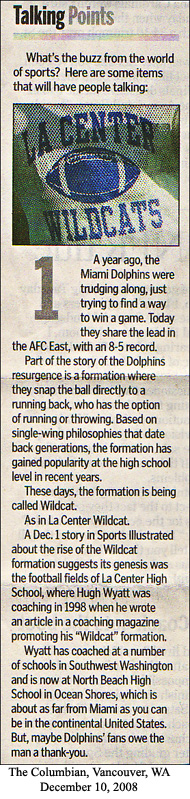
| Not a fable... |
| HOW THE WILDCAT GOT ITS NAME |
| By Hugh Wyatt |
|
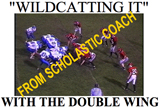
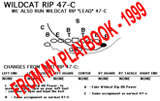
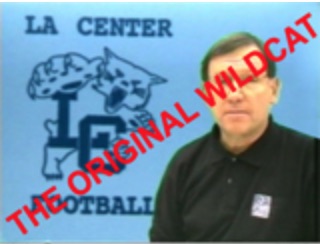
Standing on a rainy Pacific Northwest practice field more than 11 years ago, I never dreamed that I was introducing my high school team to an offensive formation that would one day explode on the national scene as an NFL "innovation." It was October, 1997, and I was showing a direct-snap version of my Double-Wing offense to my team, the La Center Wildcats. For want of a better name, we called it the "Wildcat." How original. Imagine my surprise when a few years ago I saw the University of Arkansas running a direct-snap series which it called - the "Wildcat" (?) And then this past season, the Miami Dolphins became the talk of the NFL with a direct snap package of their own, also called, thanks to an Arkansas connection on their staff, the Wildcat. Soon, NFL coaches being copycats just like the rest of us, other teams in the NFL were running their own versions of the Wildcat, and quickly the term "Wildcat" as a generic description of a direct-snap formation to a player who wasn't necessarily back there to pass became as common as "single wing" once was. So how'd the name get to Arkansas in the first place, and from there to the Dolphins? There's no plausible explanation other than a video I marketed, and an article I wrote for Scholastic Coach and Athletic Director in December, 1998. Herman Masin, legendary editor of Scholastic Coach, gave it the title, "'Wildcatting It' With the Double Wing." Soon after the article appeared, I began hearing from coaches around the country, and by popular request I put the Wildcat on the agenda at all my Double-Wing clinics. I had already included a segment on the Wildcat in my popular "Dynamics III" video, and found a lot of interest in it, especially among youth coaches, for whom the conventional center- quarterback exchange is a chronic headache. In 1999, I added a seven-page section on my Wildcat to my Double-Wing playbook, with the explanation, "Named after the mascot of the school where I first ran this set, the Wildcat - and the series it has inspired - was introduced during the final games of our 1997 season." Over the years, I've explained and shown the Wildcat to hundreds of coaches at clinics and camps, and sold numerous playbooks and videos. I haven't the slightest idea how many teams have actually run my Wildcat at one time or another, but there's a lot of them, and they know how it got its name. This whole deal of having to explain the real derivation of the name of the formation could all have been avoided if I'd just waited another 11 years to name it. I currently coach at North Beach High, in Ocean Shores, Washington, and we're the Hyaks. ("Hyak" is a Chinook Indian word meaning "Very fast.") I'd love hearing broadcasters gush over the Dolphins' innovative Hyak formation. (At least in Canada they know who gave the Wildcat its name) |
|
CLICK for Video
(1998)
|
 |
|
My 1998 Scholastic
Coach article
|
 |
|
Tim Layden's Dec 08
S-I article
|
 |
|
Kerry Eggers-
Portland Tribune
|
 |
|
Wildcat plays from
my playbook
|
 |
|
Coaches who've used
my Wildcat
|
 |
|
Game Footage of my
Wildcat
|
 2 DVD set- $49.95